For most of human history, aging was viewed as something simple:
You are born.
You grow older.
Your body slowly declines.
And the number on your birth certificate determines how “old” you are.
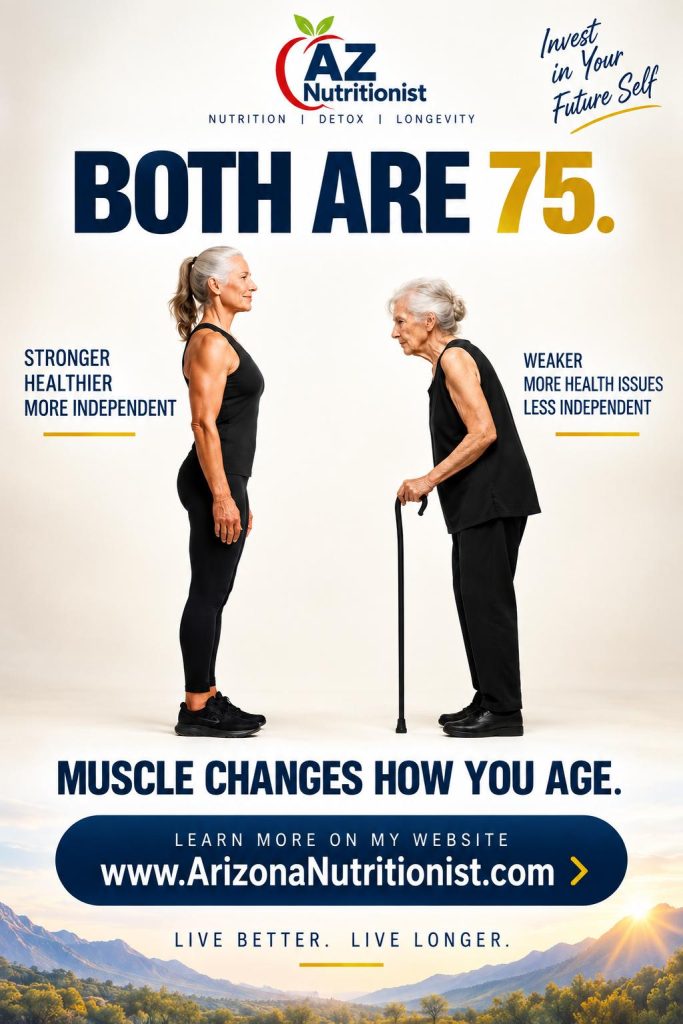
But modern longevity science is showing us something far more interesting.
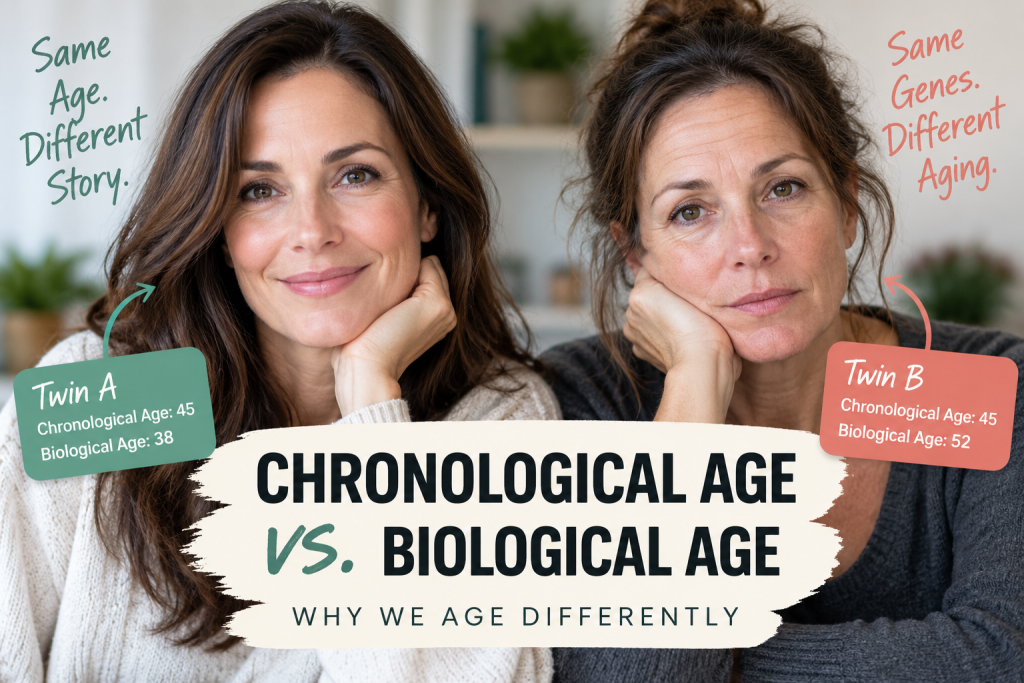
Two people can both be 60 years old and have dramatically different levels of cardiovascular health, strength, metabolic function, cognition, inflammation, mobility, and resilience.
One may function biologically more like someone considerably younger.
The other may show signs of accelerated aging.
That brings us to one of the most important ideas in longevity:
Your chronological age and your biological age are not necessarily the same thing.
And while we cannot turn back the calendar, we may be able to influence many of the biological processes that determine how quickly—or how well—we age.
Why Do We Age in the First Place?
Aging is not caused by one single process.
It is the gradual accumulation of changes occurring throughout the body.
Over time, we can experience:
- DNA damage
- Changes in gene regulation
- Mitochondrial dysfunction
- Loss of muscle mass
- Reduced metabolic flexibility
- Chronic inflammation
- Changes in immune function
- Cellular senescence
- Altered hormone signaling
- Reduced repair and regeneration
- Changes in the gut microbiome
- Loss of resilience to physical and psychological stress
Think about your body as an incredibly complex biological system.
When we are young, that system is generally very good at repairing itself.
Damage happens—but repair happens quickly.
As the decades pass, the balance can begin to shift.
More damage accumulates.
Repair mechanisms become less efficient.
And eventually, those changes begin to show up as what we recognize as aging.
But here is where things become fascinating.
The speed at which those changes occur is not identical for everyone.
Chronological Age vs. Biological Age
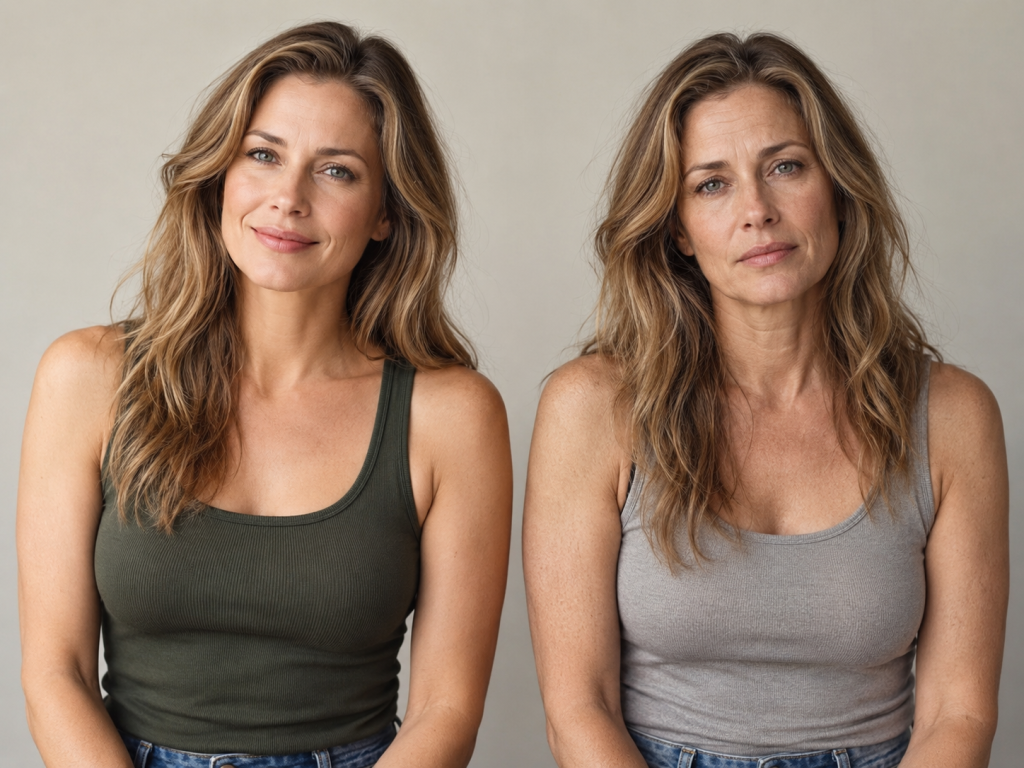
Your chronological age is simple.
It is the number of years since you were born.
If you are 50 years old, your chronological age is 50.
You cannot change that number.
Your biological age, however, is an attempt to estimate how your body is aging internally.
Researchers can look at different biological signals, including:
- DNA methylation patterns
- Metabolic markers
- Blood pressure
- Blood sugar regulation
- Lipids
- Inflammatory markers
- Organ function
- Fitness
- Body composition
- Immune function
- Other biomarkers associated with aging
One increasingly studied approach uses epigenetic clocks, which analyze patterns of DNA methylation associated with aging.
This means two people who are both chronologically 50 could theoretically have very different biological-aging profiles.
And that raises the obvious question:
Can biological aging be influenced?
The evidence increasingly suggests that at least some aging-related biomarkers are modifiable.
That does not mean we have discovered a way to literally make someone younger in every biological sense.
But it does mean that aging may be considerably more dynamic than we once believed.
Epigenetics: Your Genes Are Not the Entire Story
You inherited your DNA from your parents.
But your DNA is not simply an unchangeable instruction manual determining exactly what will happen to you.
Your cells also contain regulatory systems that influence which genes are more active and which genes are less active.
That is where epigenetics comes in.
One way to think about it is this:
Your DNA is the hardware.
Your epigenome helps control the software.
Your environment, lifestyle, nutrition, activity, sleep, stress, exposures, and other factors can influence biological signaling that interacts with gene regulation.
One of the best-known epigenetic mechanisms is DNA methylation.
Certain methylation patterns change predictably with age, which is why researchers can use them to build biological-age estimates.
Even more interestingly, some studies have shown that these biological-age measurements can move in a more favorable direction following lifestyle interventions.
That does not mean your birth certificate changes.
And it does not prove that every aspect of aging has been reversed.
But it does suggest something powerful:
The biology of aging is not completely fixed.
Your Daily Life Sends Signals to Your Biology
This is one of the ideas I find most exciting about longevity.
Your body is constantly responding to its environment.
Every day you send biological signals through the way you live.
The food you eat sends signals.
Exercise sends signals.
Sleep sends signals.
Stress sends signals.
Sunlight sends signals.
Relationships send signals.
Your sense of purpose sends signals.
Even whether you feel socially connected or chronically isolated can influence pathways associated with stress, inflammation, immune function, and long-term health.
Longevity is therefore not simply about finding one magical supplement.
It is about creating an environment in which your body receives more signals associated with repair, resilience, metabolic health, and survival.
Love, Community and Human Connection
One of the most overlooked areas of longevity has nothing to do with supplements.
It is human connection.
People need people.
Strong relationships, belonging, friendship, family, community, and purpose are consistently associated with better health outcomes and longevity.
Why?
Part of the explanation may involve the stress response.
Chronic loneliness and psychological stress can contribute to elevated stress signaling, poorer sleep, unhealthy behaviors, inflammation, and cardiovascular strain.
Positive social connection can work in the opposite direction.
Being around people you love.
Laughing.
Having meaningful conversations.
Feeling needed.
Helping others.
Belonging to a community.
Having something to wake up for.
These may sound less scientific than measuring a biomarker in a laboratory.
But they are deeply connected to human biology.
Longevity is not only about extending life.
It is about creating a life worth extending.
Your Outlook on Life Matters
Your mindset alone cannot prevent disease or stop aging.
But your psychological environment matters.
People who constantly live in fear, anger, resentment, or chronic stress are repeatedly activating physiological stress pathways.
Conversely, optimism, gratitude, purpose, emotional resilience, and healthy relationships can influence behavior and stress physiology in ways that support health.
The goal isn’t toxic positivity.
Bad things happen.
Stress is unavoidable.
The goal is resilience.
Can you experience difficulty without allowing it to control your entire life?
Can you recover?
Can you adapt?
Can you continue moving forward?
That ability to adapt is one of the central themes of longevity.
Nutrition: Information for Your Cells
Food is more than calories.
Food provides information.
Protein provides amino acids needed to maintain and repair tissues.
Healthy fats support cell membranes and numerous signaling processes.
Plants provide vitamins, minerals, fiber, polyphenols, carotenoids, flavonoids, and thousands of other compounds.
Fiber feeds microorganisms living inside the gastrointestinal tract.
Those microbes then produce metabolites that can influence metabolism, immune function, and the intestinal environment.
A longevity-focused nutritional strategy therefore isn’t simply:
“Eat less.”
It asks a better question:
What nutritional environment am I creating inside my body every day?
Muscle May Be One of Your Best Longevity Investments
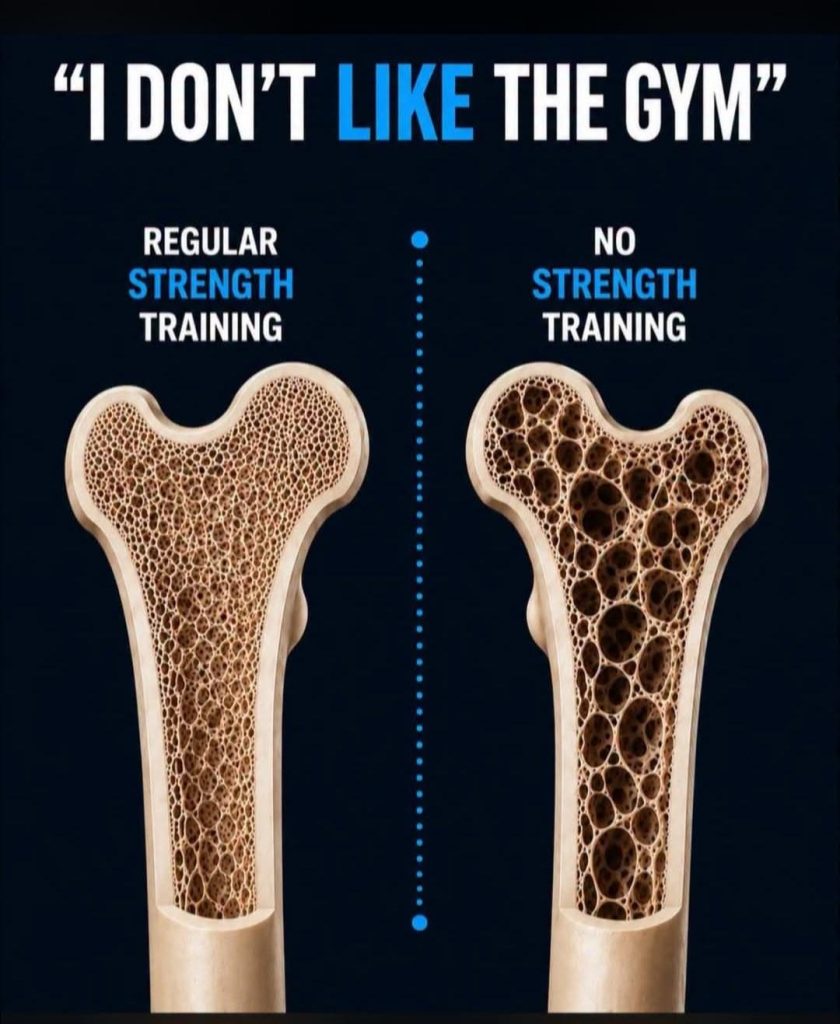
If I could convince people to protect one physical asset as they age, muscle would be near the top of the list.
Muscle is not simply cosmetic.
It is metabolically active tissue.
Maintaining muscle and strength supports:
- Glucose disposal
- Insulin sensitivity
- Mobility
- Bone health
- Physical independence
- Metabolic health
- Injury resistance
- Functional capacity
As we age, losing muscle and strength can dramatically change quality of life.
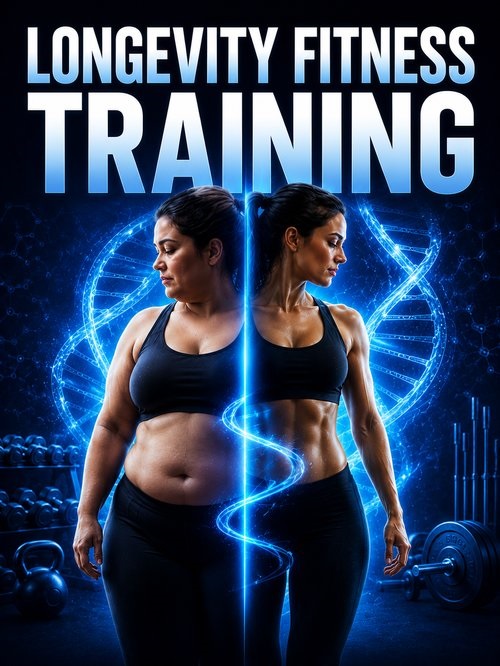
That is why resistance training should not simply be viewed as bodybuilding.
It is longevity training.
Cardiovascular fitness matters too.
Your heart, lungs, blood vessels, mitochondria, and muscles all need regular physiological challenges.
The body adapts to what you repeatedly ask it to do.
Sleep Is When the Body Gets a Chance to Repair
You cannot constantly push the body and expect optimal health.
Recovery is part of the program.
During sleep, important processes occur involving neurological function, hormonal signaling, metabolic regulation, immune activity, memory, and tissue repair.
Poor sleep can influence hunger, insulin sensitivity, blood pressure, mood, recovery, and physical performance.
You cannot out-supplement chronic sleep deprivation.
Sometimes the most powerful longevity strategy is also the simplest:
Turn off the lights and go to bed.
Stress the Body—But Give It Time to Recover
Not all stress is harmful.
Exercise is stress.
Fasting is stress.
Heat exposure is stress.
Cold exposure is stress.
The difference is dose.
A manageable challenge followed by adequate recovery can stimulate adaptation.
This concept is often referred to as hormesis.
The body receives a small challenge and responds by becoming more resilient.
But more is not always better.
Too much training, too much fasting, too little sleep, and too much psychological stress can move you in the opposite direction.
Longevity is about finding the balance between:
Challenge and recovery.
Can We Really “Reverse Aging”?
This is where language matters.
We cannot currently take a 70-year-old person and make every cell, organ, and biological system identical to that of a 30-year-old.
So when people talk about “reversing aging,” we need to be precise.
What we can potentially influence are many of the processes and biomarkers associated with aging.
That may include improvements in:
- metabolic health
- cardiovascular fitness
- body composition
- strength
- insulin sensitivity
- inflammation
- physical function
- certain biological-age measurements
- and potentially some epigenetic aging markers
I have personally used biological-age testing as one way of tracking my own longevity strategy, and my results have shown a biological-age estimate significantly younger than my chronological age.
Those numbers do not mean I have literally traveled backward in time.
They are one more tool for asking a much more useful question:
Is the way I am living moving my biology in a healthier direction?
That is the question longevity should ultimately be about.
Stop Aging by Accident
Most people have a retirement plan.
Very few have an aging plan.
They plan financially for their 60s, 70s, and 80s—but rarely plan physically or metabolically for those decades.
What kind of body do you want at 70?
Will you still be strong?
Can you travel?
Can you get off the floor easily?
Can you carry your groceries?
Can you play with your grandchildren?
Will you still have energy and curiosity?
Those outcomes are influenced by decisions being made decades earlier.
You cannot control everything.
Genetics matter.
Disease can happen.
Life can be unpredictable.
But there is an enormous difference between controlling everything and controlling nothing.
There is a great deal we can influence.
And that is the foundation of longevity.
Live Better. Live Longer.
Longevity isn’t about becoming obsessed with death.
It is about becoming more intentional about life.
Eat in a way that supports your biology.
Build muscle.
Challenge your cardiovascular system.
Sleep deeply.
Recover.
Spend time outside.
Keep learning.
Manage stress.
Love people.
Build community.
Find purpose.
Laugh.
Stay curious.
And continue giving your body reasons to remain strong and resilient.
You cannot stop the calendar.
But you can become much more intentional about how you travel through it.
Want to Go Deeper?
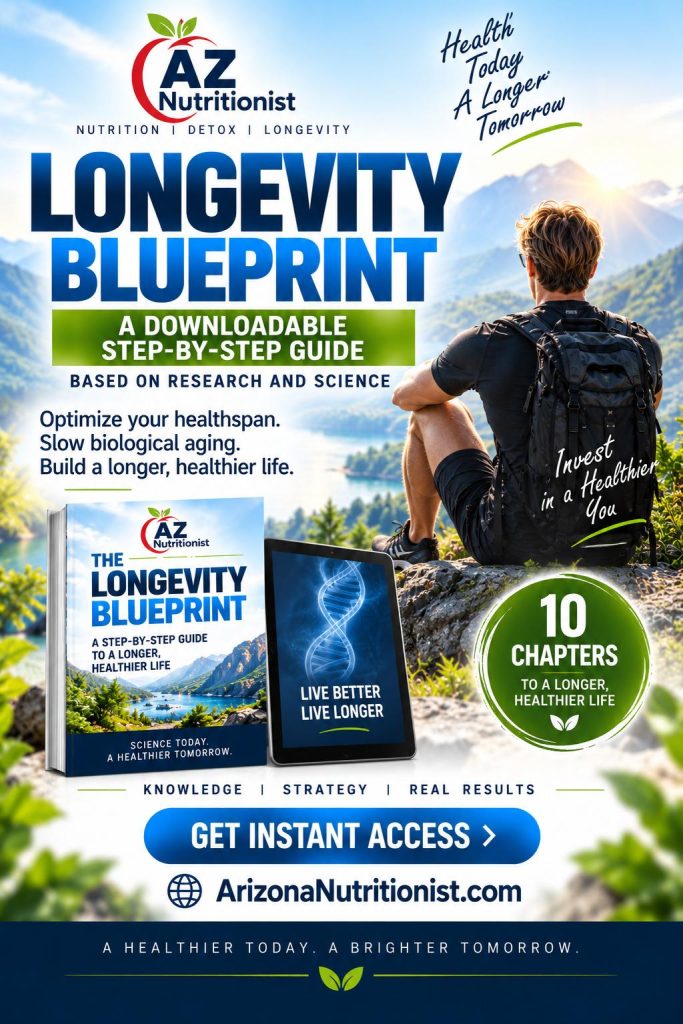
If you want to learn the complete approach I use for longevity, biological aging, nutrition, fitness, recovery, metabolic health, and healthy aging, explore The Longevity Blueprint.
It is designed to turn the science of longevity into a clear, practical, step-by-step strategy you can actually apply to your life.
Learn more at www.ArizonaNutritionist.com
LIVE BETTER. LIVE LONGER.